Blog

Overview
The Tax and Legal Forum 2025 addressed the rapid evolution of tax and legal practices in the digital age, focusing on professionalism, technology, business connectivity, and justice transformation.
Welcome Address by Mr. Yee Chee Mun, CEO at Wezmart Group:
Mr. Yee framed the forum’s purpose around navigating accelerating changes in tax and legal landscapes, citing key developments such as e-invoicing, Malaysian Business Reporting System (“MBRS”) 2.0, Mandatory e-Invoice Tax Reporting System (“MITRS”), and global trends in digital taxation and sustainability reporting.
He outlined three pillars of driving impact:
- Professionalism: Technology evolves, but people remain at the heart of trust and credibility. Accountants, tax practitioners, lawyers, and company secretaries safeguard integrity through competence and ethics.
- Technology: Transformation is not about digitizing old processes but reimagining them entirely. From AI-assisted legal drafting to digital compliance monitoring, technology amplifies capabilities and enables higher standards of service.
- Business Connectivity: Compliance is no longer peripheral; it is central to business strategy. True connectivity links profit with purpose, ensuring sustainability, governance, and value creation across borders.
Keynote Address by YBhg Dato’ Mary Lim Thiam Suan: “Justice in the Digital Age: Transforming Tax and Legal Practices for Tomorrow.”

Dato Mary Lim described the digital revolution as humanity’s defining transformation, where data is the new currency. Every action leaves a footprint, creating accountability and new governance challenges. Malaysia and other economies must adapt policy and systems to keep pace with Information and Communication Technology (“ICT”) advancements.
- Digital Economy & Taxation
- Traditional tax frameworks based on physical presence are outdated.
- Digital platforms monetize data and connectivity rather than physical products, creating complex jurisdictional questions (e.g., who to tax: Google, users, or advertisers?).
- Governments are adopting new models for revenue collection, moving from e-government to e-governance and possibly toward e-democracy.
- Justice in the Digital Age
- Fairness and justice must evolve alongside technology.
- Dispensation of justice extends beyond courts to include arbitration, mediation, and online dispute resolution (ODR).
- ASEAN initiatives in ODR and arbitration highlight regional cooperation in digital justice frameworks.
- Artificial Intelligence (AI) and Legal Practice
- AI is reshaping how disputes, compliance, and governance are managed.
- While AI lacks a soul, ethical use depends on human integrity.
- Questions such as the possibility of “AI judges” remain open, requiring continuous vigilance and open-mindedness.
- Regional and Global Developments
- ASEAN Law Forum and China Arbitration Summit are advancing digital-ready arbitration frameworks.
- Malaysia’s adoption of the UNCITRAL Model Law on Cross-Border Insolvency has far-reaching implications for asset recovery and multinational businesses.
- Practical Implications for Practitioners
- Taxpayers increasingly challenge tax authorities through judicial review.
- Professionals must prepare for roles not only as advisers but as contributors to justice, potentially serving as judges, commissioners, or amicus curiae.
Key Takeaways:
- Professionalism Remains Paramount
- Despite rapid technological shifts, credibility and trust depend on human expertise, integrity, and collaboration.
- Technology as an Amplifier, Not a Threat
- True digital transformation requires rethinking processes, not merely digitizing them. AI, e-invoicing, and MBRS 2.0 should be harnessed to deliver higher standards of compliance, governance, and insight.
- Business Connectivity and Purpose-Driven Strategy
- Compliance is no longer a checkbox but part of a company’s DNA. Aligning profit with sustainability, governance, and societal responsibility is essential for long-term resilience.
- Justice in the Digital Age
- Legal systems must evolve to accommodate the digital economy, ODR, and new forms of arbitration. Justice must remain fair, inclusive, and technologically adaptive.
- Regional and Global Collaboration is Crucial
- ASEAN and international initiatives show that no jurisdiction can reform in isolation. Taxation, insolvency, and dispute resolution increasingly require cross-border alignment.
- AI and the Future of Practice
- AI will transform professional roles but cannot replace integrity, values, and judgment. Lawyers, tax agents, and accountants must master AI as a tool while safeguarding ethical standards.
- A Call to “Co-opetition”
- Growth in the profession depends on balancing competition with collaboration, fostering collective innovation for the benefit of industries and societies.
Plenary 1: Corporate Governance in the Crosshairs—Legal Duties, Digital Compliance, and Director Accountability

Moderator: Simon Yeoh, Immediate Past President of MAICSA
Speakers:
- Leong Oi Wah, Director, Corporate Development
- Ooi Suan Kim, Honorary Treasurer of Inns of Court Malaysia
- Setting the Stage: AI and Governance in Malaysia
- Malaysia stands at a pivotal moment in its AI journey, guided by the National AI Roadmap 2021–2025 and AI Governance & Ethics Guidelines.
- AI is only a tool, not a replacement for human discernment. Boards must use it ethically, responsibly, and with oversight.
- Global examples show both opportunities and risks:
- Hangzhou Internet Court: virtual judge issuing judgments.
- UK: first fully AI-run law firm approved (May 2025).
- US: avatar delivering a victim impact statement in court.
- Sabah & Sarawak Courts: AI pilot tool assisting judges in sentencing.
Lesson: AI enhances efficiency but cannot substitute human judgment, especially in law and governance.
- The Governance Professional’s Role (Oi Wah’s Insights)
- Filtering and Interpreting Information: Company secretaries and governance professionals must translate regulatory and ESG complexity into board-level decisions.
- Compliance as Strategy: Moving beyond box-ticking, compliance aligns with national priorities (e.g., climate change) and builds investor confidence.
- Streamlining Processes: Summaries, dashboards, and AI tools improve decision-making efficiency.
- Foresight and Capacity Building: Beyond firefighting, governance professionals must help boards consider long-term risks and attend continuous training.
- Digital Reporting: Systems like MBRS 2.0 and digital dashboards are not just regulatory necessities but strategic tools for boards.
Lesson: Compliance, when reframed, is a driver of competitiveness and resilience.
- Legal Duties and Enforcement (Ooi Suan Kim’s Insights)
- Accountability is Personal: Directors cannot outsource responsibility. Regulators (MACC, LHDN, etc.) are proactive under the current government.
- Statutory Duties (Companies Act (“CA”) 2016, ss. 211–215) apply equally to all directors (executive, non-executive, and senior officers like CFOs).
- Case Law Highlights:
- Kin Joo Can Factory: Duties bind all directors equally.
- TAS Logistics: Directors personally liable for conflicts of interest and secret profits.
- Dr. Goh Jin Hian: Directors are sentinels, not forensic investigators—liability balanced with practicality.
- Iris Corporation: Courts respect honest, informed business judgment, avoiding hindsight bias.
- Other Risks: AMLA enforcement, tax liabilities under s.75A ITA, immigration restrictions for directors with unpaid taxes.
Lesson: Directors must act honestly, diligently, and transparently—failure invites personal liability.
- Challenges in Shaping Board Mindsets (Oi Wah’s Insights)
- Resistance to Change: Profitable companies often resist digitalization until forced.
- Confidence Gap: Directors may lack technical knowledge but can learn to ask the right questions.
- Regulatory Evolution: Filings (MBRS → CORE) require constant adaptation.
- Blind Spots in AI: Biases and errors (e.g., Amazon’s recruitment AI) highlight the need for human oversight.
Lesson: Governance professionals must be strategists, not mere administrators, bridging technology, ethics, and long-term governance.
- Reliance on AI and the Business Judgment Rule
- Section 214 CA: Presumes directors act in good faith unless proven otherwise.
- Section 215 CA: Directors may rely on expert advice—but AI is not yet legally recognized as an “officer or person.”
- Case Reference: Moffat v. Air Canada — chatbot error held the company liable. Boards must fact-check AI outputs before relying on them.
- Practical Point: Independent assessment and professional advice remain essential; AI cannot replace accountability.
Lesson: AI can aid but not shield directors—verification is the director’s duty.
- Agile Governance and Board Recruitment
- Diversity Beyond Gender: Includes age, expertise, and technology literacy.
- Tech-Proficient Directors: Boards must recruit members who understand digitalization, cybersecurity, and AI governance.
- Independent Judgment: Directors must request adequate information; failure to do so undermines statutory defences.
Lesson: Future-ready boards require diverse, tech-aware directors with courage to probe management.
- Q&A and Final Reflections
- Conflicting Professional Advice: Ultimately, decisions lie with the board—diversity of perspectives is valuable, but directors must weigh risks.
- Board Involvement in Operations: Directors must oversee without micromanaging—ensuring systems exist while respecting management’s role.
- One Final Message:
- Kim: Think long-term, probe, verify—non est factum is no defense.
- Oi Wah: Governance professionals must be value drivers, not silent administrators.
- Simon Yeoh: Record-keeping is critical—documents outweigh testimony in court.
- Justice Nalini (quoted): “AI may excel in rational output but fails in objectivity—humans remain indispensable.”
Key Takeaways
- AI is a tool, not a substitute—Boards must adopt it responsibly, verify outputs, and integrate ethics into digital transformation.
- Compliance is strategic—Done well, it enhances investor confidence, resilience, and competitiveness.
- Directors’ accountability is personal—They cannot outsource duties, must balance entrepreneurship with diligence, and may face personal liability for failures.
- Governance professionals are strategists—Beyond compliance, they filter, translate, and guide boards through complexity.
- Future boards must be diverse and tech-literate—Age, experience, and technological fluency matter as much as gender.
- Documentation is defence—Proper records and disclosures protect directors when decisions are scrutinized.
- Human judgment remains irreplaceable—AI enhances but cannot replace ethical reasoning, foresight, and independent assessment.
Plenary 2: Landmark Tax Cases That Are Redefining Business Strategy

Moderator: Gow Jia Jian, Non-Executive Director at Wezmart Group
Speakers:
- The Hon. Justice Datuk Seri Mohd Firuz bin Jaffril, Court of Appeal Judge
- Anand Raj, Tax Practitioner (Head of Tax Disputes at Shearn Delamore & Co.)
- Judicial Perspective (Justice Mohd Firuz)
Tax affects every individual and business. In recent years, the Inland Revenue Board (“IRB”) has grown increasingly adventurous in revenue collection, making the environment more challenging for taxpayers and practitioners alike.
How Tax Disputes Reach the Courts
- Direct Assessment Cases— IRB raises an assessment; if unpaid, they sue.
- Historically constrained by Section 106(3) ITA – courts could not examine the merits of an assessment (only whether it was issued).
- IRB would seek summary judgment (Order 14), citing Suma Tobacco and similar cases: “pay first, appeal later” to SCIT.
- Amendment to the Courts of Judicature Act (2021): Denial of summary judgment is now non-appealable → cases proceed to full trial. This shift has opened space for genuine taxpayer challenges.
- SCIT Appeals—When assessments are paid under protest and appealed, SCIT findings of fact are binding unless entirely baseless. Courts may only intervene on questions of law.
Judicial Philosophy
- Courts interpret grey areas in favour of taxpayers (e.g., National Land Finance—retrospective assessments struck down).
- While IRB is emboldened, courts emphasize fairness, certainty, and proportionality in applying tax law.
Takeaway: The judiciary is prepared to check IRB overreach—taxpayers should not hesitate to litigate when principles of fairness are at stake.
- Real-Life Tax Cases & Business Lessons (Anand Raj)
Case 1: Kind Action (Certainty of Assessments)
- Facts: Company disposed plantation land (RPGT applied, certificates issued). Later, IRB branch reclassified under income tax to meet collection targets.
- Outcome: Court of Appeal and Federal Court ruled in favour of taxpayer.
- Overturned “no estoppel against revenue.”
- Once RPGT assessment issued (final/conclusive), IRB bound—cannot later recharacterize.
- Lesson:
- Certainty in tax rulings is essential for business planning.
- Assessments (pre-2025 regime) are binding; IRB cannot flip-flop.
- SVDP letters and settled audits carry legal weight.
Case 2: Ibrako Peramba (Tax Avoidance & Privilege)
- Facts: Client structured projects (build/lease/sell) based on Arthur Andersen’s advice.
- Outcome: Courts struck down as tax avoidance scheme. Tax agents’ advice seized and used—no privilege.
- Lesson:
- No room for artificial tax avoidance.
- Only legal advice (from lawyers) carries privilege.
- Boards must distinguish between tax planning (legitimate) and avoidance (invalid).
Case 3: Negligence & Penalties (Attica, CIMB)
- Issue: IRB equated taxpayer disagreement with negligence.
- Outcome: Courts clarified—mere difference of opinion is not negligence.
- Attica: Adopting favourable interpretation ≠ negligence; penalties discharged.
- CIMB: Still on appeal.
- Lesson:
- Always obtain written professional opinions (lawyers for law, accountants for accounting).
- Written advice shields taxpayers from negligence penalties.
Case 4: Tenaga Nasional Berhad (TNB)
- Facts: Claimed allowance under wrong provision (s.7A instead of s.7B). Lost in Federal Court.
- Cost: RM1.4 billion lost—ultimately passed to consumers.
- Lesson:
- Tax litigation is all-or-nothing.
- Best strategy: negotiate early (before final court decision) when leverage exists.
Case 5: Penang Development Corporation (PDC)
- Issue: IRB argued ambiguity favours taxpayer only in “charges/allowances,” not in “exemptions/remissions.”
- Outcome: Federal Court rejected IRB—uniform principle: ambiguities resolved in favour of taxpayer.
- Lesson:
- IRB continues to mislead on settled law.
- Boards must know their rights—all ambiguities favour taxpayers.
- Panel Q&A Highlights
- Mediation with IRB? Rare and ineffective—IRB lacks instructions and leverage.
- Strategic Preparation: Documentation, SWOT/risk analysis, and early engagement critical.
- ChatGPT/AI Advice? Not a substitute—tax law is underdeveloped; poor advice can be fatal.
- Should boards fight bad cases? Depends—law underdeveloped; even “weak” cases may succeed if IRB misapplies guidelines over statute.
- Final Messages:
- Avoid bogus tax agents—choose advisors with know-how, not know-who.
- Written legal opinions are protective shields.
- Certainty and fairness in tax law are achievable if tested in court.
Key Takeaways for Boards & Practitioners
- Certainty matters—Once assessments are issued, IRB is bound. Businesses can plan with confidence.
- Privilege is legal, not accounting—Only lawyers’ advice is privileged; tax agents’ advice may be used against taxpayers.
- Written advice is protection—Proper professional opinions insulate from negligence penalties.
- Early settlement is strategic—Negotiate incentives/disputes before reaching a final adverse decision.
- Ambiguities favour taxpayers—Courts uniformly side with taxpayers on unclear provisions.
- Judiciary is pragmatic—Courts are ready to check IRB excesses, balancing fairness and law.
- Boards must invest in compliance expertise—Cheap or careless advice is costlier in the long run.
Tax is no longer just compliance—it is a strategic battlefield. The IRB is aggressive, but courts are increasingly protective of fairness and certainty. For businesses, success lies in planning with clarity, defending with integrity, and seeking advice from the right professionals.
Plenary 3: Digital Trail, Real Risk: Tax Audits & Investigations in the Post E-invoicing Era

Moderator: Bruce Leong, Accountant, Wezmart Group
Speakers:
- Renganathan Kannan, Executive Director at TRATAX Sdn Bhd
- Wong Yu Sann, Tax Director at Deloitte Tax Services Sdn Bhd, ACCA
E-invoicing leaves a digital footprint. Audits are no longer random checks—they’re becoming data-driven forensic investigations.
As of July, LHDN reported processing over 400 million e-invoices. Earlier this year, 66,000 non-compliant taxpayers were flagged from e-commerce platforms alone. These are early signals of how e-invoicing reshapes compliance.
And what does LHDN do with this data? Collect taxes—naturally. Last year, they raised MYR 1.6 billion from audits and investigations. With e-invoicing, we can expect more.
- Practitioner’s Perspective (Renga)
Key themes from the field:
- Litigation Landscape: Top disputes remain around allowable expenses (s.33(1)); RPGT valuation; time-barred assessments; and s.44(6) approvals.
- Taxpayer “Grades”:
- Grade A – highly compliant; audits should resolve within 3–6 months.
- Grade B – “Mickey Mouse” compliant.
- Grade C/D – chronic late-filers or non-filers; they attract full investigations.
Audit triangle: IRB officers, taxpayers, and registered tax agents. Beware bogus representatives—only licensed agents protect you.
Key risk areas:
- Assessments beyond 5 years where fraud/negligence alleged (up to 20 years).
- Section 44(6) renewals—80% expire soon; renewal rules have tightened.
- Appeals—file Form Q within 30 days, otherwise face uphill battles.
“E-invoicing will push disputes into the four-digit range. Do we have the capacity to manage? That’s the challenge ahead.”
- Corporate Perspective (Yu Sann)
For large firms, e-invoicing is not just an IT upgrade.
Core challenges:
- Data integrity: Clean master data is critical—company names, addresses, figures must match across systems.
- Alignment: ERP, finance, sales, and tax must reconcile submissions with audit reports and transfer pricing files.
- Controls: Approval processes, notifications, and audit trails must be embedded.
New layers:
- MITRS (YA 2025): Companies must file audited reports, computations, and schedules within 30 days—feeding LHDN with real-time comparables.
- Third-party data matching: IRB cross-checks with SSM, JPJ, Customs, and banks. Rental income, car ownership, and property deals are easily tracked.
“E-invoicing doesn’t replace record-keeping—it adds another layer of transparency. Every number must reconcile across the ecosystem.”
- Panel Dialogue—Digital Enforcement
- From Renga: “Think of it this way—Google may know more than your spouse, but IRB now knows more than Google. With e-invoicing, enforcement is real-time. It’s about shrinking the black economy.”
- From Yu Sann: Common triggers include non-filing, mismatched declarations, weak inter-company pricing, and lifestyle mismatches.
Key advice:
- Disclose early; voluntary correction is treated more leniently than detected fraud.
- Industries at risk: construction (cash payments), F&B (volume discounts/EPOS integration), trading/distribution (cross-border mismatches).
- Closing Practical Tips
- For businesses: Reconcile monthly, fix the Malaysia Standard Industrial Classification (“MSIC”) coding issues now, and ensure tax governance frameworks are in place.
- For tax professionals: Stay updated via Chartered Tax Institute of Malaysia (“CTIM”)/Malaysian Institute of Accountants (“MIA”), engage with IRB early, and manage client relationships strategically.
- For all taxpayers: Embrace digital, keep soft copies, and remember—two things are unavoidable: death and tax.
Tax Policy Spotlight: “Malaysia’s Emerging Tax Policy Priorities: What’s Next for Businesses and Professionals.”
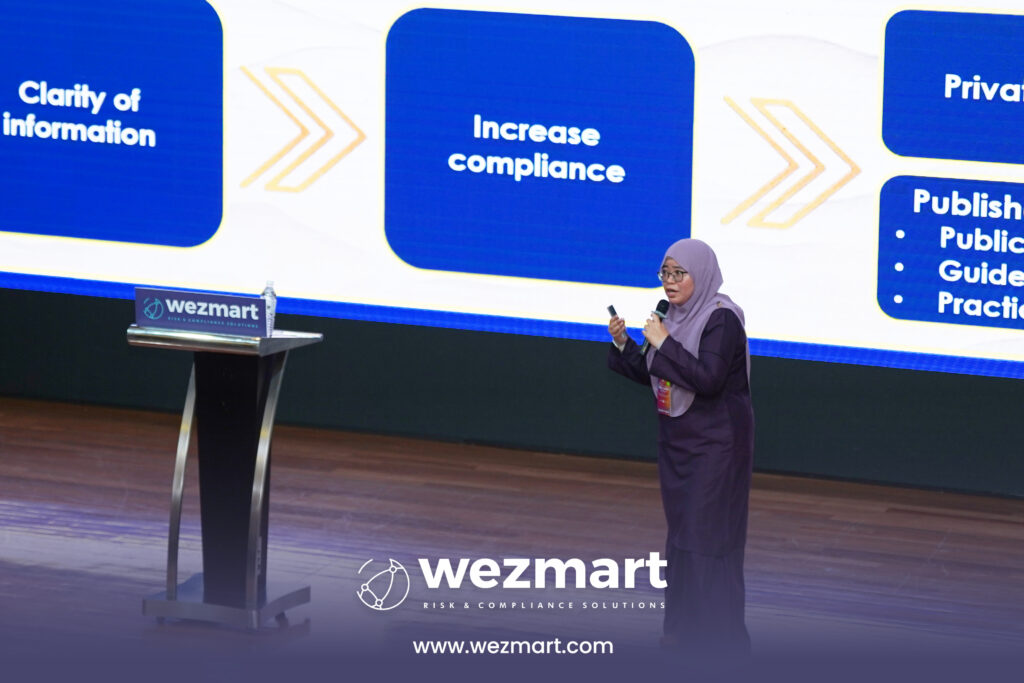
by Rosnita Binti Ahmad, Chief Officer (Inland Revenue Board of Malaysia)
Malaysia’s tax landscape is evolving as the government sharpens its focus on e-Invoicing enforcement, stronger tax governance, enhanced transfer pricing compliance, and the use of data driven audits. These priorities are reshaping how businesses manage tax risk and how professionals deliver advisory services. This session explores the emerging tax policy direction and key areas of focus by the IRB. Participants will gain valuable insights on what’s ahead—and how to prepare for the next phase of Malaysia’s tax transformation.
IRB is shifting from an “audit-first” to a trust-based compliance framework.
- Pilot certification programme: Seven companies successfully certified—three years audit-free, priority refunds, and reduced penalties.
- Use of AI nudges: Behavioural prompts reminding taxpayers to file before best-judgment assessments.
- Engagement: IRB is open to dialogue, private rulings, and pre-release consultations on public rulings.
- Taxpayer Engagement & Compliance
The IRB emphasised that the administration of the tax system rests on voluntary compliance, and therefore taxpayers are expected to make full, accurate, and timely disclosures in their returns. In particular, taxpayers should ensure that transfer pricing documentation, group reporting under the Country-by-Country (CbC) regime, and disclosures relating to related-party transactions are in strict compliance with the Income Tax Act 1967 and the Transfer Pricing Rules/Guidelines.
- Digitalisation & E-Filing
IRB highlighted its ongoing efforts to streamline tax administration through digitalisation, including the mandatory use of e-filing, electronic submissions for tax rulings, and the MyTax portal. Tax agents and practitioners were reminded to familiarise themselves with these platforms to ensure smooth compliance for their clients.
- Audit & Enforcement Priorities
The IRB confirmed that audit and enforcement activities in 2023–2024 will focus on high-risk sectors, including:
- Transfer pricing and cross-border arrangements,
- Digital economy and e-commerce players,
- Related-party transactions and profit-shifting risks,
- Compliance by high-net-worth individuals and family-owned enterprises.
The Board stressed that audits are not meant to be punitive but to ensure compliance and to encourage taxpayers to adopt best practices in record-keeping and documentation.
- Policy Alignment
The IRB reaffirmed its commitment to aligning Malaysian tax policy with international standards (e.g. BEPS 2.0, OECD Pillar Two Global Minimum Tax), while also ensuring that measures taken are suited to Malaysia’s domestic economic environment.
“Closing the trust gap between IRB and taxpayers is our priority. Compliance is not just enforcement—it’s partnership.”
Closing Keynote Address: “Tax in Transition: A Strategic Look at Direction, Compliance & Business Impact Before Budget 2026”

by Soh Lian Seng, President of Chartered Tax Institute of Malaysia (CTIM), Partner and Head of Tax at KPMG Tax Services Sdn. Bhd.
Malaysia’s tax landscape is shifting—with post e-Invoicing enforcement, expanded Service Tax, new capital gains and dividend taxes, and a sharper focus on transfer pricing and legal rulings. These developments are driving new expectations around compliance, tax governance, and business strategy. This session provides a strategic perspective on the evolving tax environment, highlighting key trends, potential impacts on businesses, and how tax professionals and corporate leaders can stay ahead as Malaysia moves toward Budget 2026.
Malaysia’s fiscal trajectory shows rising expenditure—from MYR 388B (2023) to MYR 471B (2025). Tax revenues must keep pace.
Looking to Budget 2026:
- Expect continuity in SST expansion, dividend and capital gains taxes, and global minimum tax.
- GST’s return remains uncertain—possibly not immediate, but part of long-term conversations.
- Engagement with stakeholders remains vital to balance fiscal responsibility with growth.
Mr. Soh reminded members of the Chartered Tax Institute of Malaysia (“CTIM”) that practitioners play a vital role as intermediaries between the IRB and taxpayers, not merely in ensuring compliance but also in upholding the integrity of Malaysia’s tax system.
He highlighted the increasing importance of keeping abreast with international tax developments, particularly the implementation of Pillar Two and digital economy taxation. He stressed that Malaysian practitioners must remain proactive, well-informed, and ready to advise clients on both domestic and cross-border implications.
“Our role as professionals is not prediction, but preparation. Compliance today is the foundation for resilience tomorrow.”