Blog
Because Regulators, Investors, and Customers are Already Watching

In 2025, ESG and sustainability aren’t just buzzwords—they’re survival tools.
Whether you run a listed company on Bursa or an SME supplying to global clients, ignoring ESG exposes you to penalties, funding loss, and reputational collapse. Today, ESG is no longer “CSR charity.” It’s a compliance requirement, an investor filter, and a competitive edge.
ESG Fundamentals: The Three Pillars
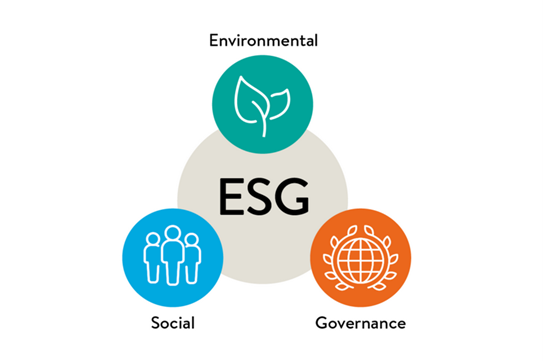
At its core, ESG is a framework for how businesses operate responsibly:
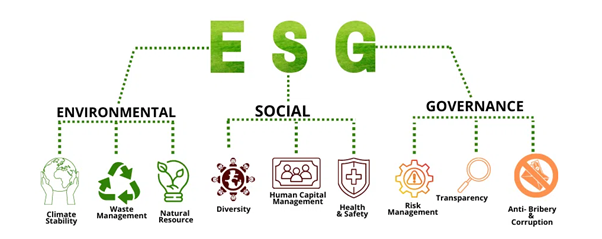
- Environmental (E): A company’s impact on the natural world—climate change, energy use, emissions, waste, water, deforestation.
- Social (S): How a company treats people—employees, customers, suppliers, and communities. Covers labour standards, diversity, product safety, and human rights.
- Governance (G): How a company is run—board structure, transparency, anti-corruption, shareholder rights, compliance with laws.
Focus of Social Accounting: Measuring an organisation’s social impacts and its stakeholder relationships, not just its financial results.
Global Origins of ESG
The modern ESG movement started with the 2004 “Who Cares Wins” report, urging financial institutions to integrate ESG into investment decisions. This was reinforced by the UN Environment Programme Finance Initiative, highlighting the costs of ignoring sustainability.
Today, ESG aligns closely with the United Nations’ 17 Sustainable Development Goals (SDGs)—from climate action to responsible consumption—making it part of a global shift toward sustainable, ethical business practices.
Why ESG Matters
- Financial Performance:
Strong ESG practices cut operating costs (energy efficiency, waste management) and boost revenue through brand trust. Studies show a 90% correlation between sustainability performance and financial returns.
- Regulatory Compliance:
- Bursa Malaysia requires listed companies to publish sustainability statements.
- IFRS S1 and S2 (aligned with TCFD) are being phased in.
- Expect internal audit reviews, enhanced disclosures, and third-party assurance of ESG data.
- Investor Expectations:
Modern investors prioritise ESG alongside profit. Non-compliant businesses risk losing funding and export opportunities, particularly in the US and Europe.
- Global Risks:
The Global Risk Report 2023 lists climate change as the top global risk, with over half of the top 10 linked to ESG.
- Stakeholder Demand:
Customers, suppliers, and communities demand sustainable and ethical practices. SMEs, in particular, must ensure supply chain responsibility to retain market access.
💡 Pro Tip: ESG isn’t paperwork. It’s proof of trust
Who Should Care?
- Listed companies: To comply with Bursa and SC requirements.
- SMEs: To stay in global supply chains, win tenders, and access financing.
- Investors & Asset Owners: To manage risk and protect long-term returns.
- Policymakers: To push sustainable growth and align with global benchmarks.
Example: Malaysian exporters of palm oil, timber, or manufactured goods face stricter ESG checks under EU deforestation and supply chain laws. No ESG report = no contract.
ESG for Public Listed Companies in Malaysia
For Bursa-listed companies (Main Market and ACE Market), ESG isn’t optional:
- Mandatory Sustainability Statements must be included in annual reports.
- These statements must explain how the company identifies, manages, and responds to material economic, environmental, and social risks.
- Bursa’s Sustainability Reporting Guide (Practice Note 9 & Guidance Note 11) sets out detailed practices, governance structures, materiality assessments, and disclosure standards.
- As of December 2024, Bursa strengthened requirements to align with the National Sustainability Reporting Framework and global standards like IFRS S1 (General Sustainability Disclosures) and IFRS S2 (Climate Disclosures).
💡 Pro Tip: For SMEs, the Bursa rules may not apply directly, but they will matter indirectly if your clients, suppliers, or financiers are listed companies.
How to Integrate ESG (Practical Steps)
- Materiality Assessment: Identify key ESG risks and opportunities.
- Governance Setup: Assign board or senior management responsibility.
- Measure & Disclose: Track GHG emissions (Scopes 1–3) and disclose with IFRS S1/S2 or GRI.
- Independent Assurance: Validate data credibility.
- Stakeholder Engagement: Train employees, brief investors, align suppliers.
💡 Tip: Prevention is cheaper than greenwashing litigation.
Malaysia’s ESG Landscape
- Bursa Listing Requirements: Sustainability statements, climate disclosures, and assurance are mandatory for listed companies.
- National Sustainability Reporting Framework: IFRS S1 and S2 will be mandatory for listed companies and large non-listed companies (revenue > RM2 billion) starting 2026–2027.
- Malaysian Code on Corporate Governance (MCCG): Boards are expected to embed sustainability into corporate strategy and performance evaluation.
- SME Reality: Even if not directly regulated, SMEs must comply indirectly to stay bankable and supply-chain eligible.
New Tax Incentives for ESG
To accelerate ESG adoption, the Minister of Finance issued the Income Tax (Deduction for Expenditure in Relation to Environmental Preservation, Social and Governance) Rules 2025 (P.U. (A) 193/2025), effective from YA 2024–2027.
Key Features:
- Eligibility: Applies to banks, insurers, Labuan companies, Malaysian tax residents, and SMEs (as defined under the SME Corp Act 1995).
- Deduction Limit: Up to RM50,000 per YA for qualifying ESG-related expenditures
- Purpose: To encourage spending on sustainability, social responsibility, governance, and digital transformation.
Qualifying ESG Expenditures (YA 2024–2027)
Category | Eligible Entities | Examples of Qualifying Expenditures |
ESG Reporting (E, S & G) | Financial institutions (BNM-supervised) and Bursa-listed companies | • Validation, verification & certification of ESG practices, GHG emissions, ESG exposure |
Social & Governance | Companies or Labuan companies resident in Malaysia | • Preparation of reporting under the Tax Corporate Governance Framework (TCGF) |
Governance (Digital Transformation) | Micro enterprises & SMEs | • Consultation fees for customised e-invoicing software |
Conditions & Restrictions:
- Deduction capped at RM50,000 per YA.
- No double deductions (e.g., under s.33 Income Tax Act (“ITA”) 1967, exemptions, or other rules).
- Records must be kept for IRB verification.
- Focuses on operational/advisory costs—not capital expenditure.
- For TCGF claims, a certificate of compliance from an independent reviewer is mandatory.
Why It Matters:
This incentive makes ESG not just a cost of doing business—but a deductible investment. SMEs can finally justify ESG spend with tax savings.
💡 Pro Tip: Track 2024 expenditures carefully—the Rules apply retrospectively from YA 2024, meaning claims can be made for qualifying expenses already incurred.
Reporting Frameworks: The Global Benchmarks
- GRI (Global Reporting Initiative): Impact materiality (company’s effect on people and environment).
- IFRS S1 & S2: Investor-focused financial materiality (governance, strategy, risk, metrics).
- SASB: Sector-specific, financially material metrics.
- IIRC: Integrated reporting (financial + non-financial).
- TCFD: Climate disclosures (now embedded in IFRS S2).
💡 Tip: Choose a framework based on who you’re reporting to—investors (IFRS/SASB) vs stakeholders (GRI).
Benefits of ESG Compliance
- Cost Savings: Efficiency lowers bills.
- Revenue Growth: Sustainability attracts loyal customers.
- Risk Mitigation: Reduce exposure to fines, penalties, and greenwashing claims.
- Investor Attraction: ESG-compliant companies access better financing and export markets.
Key Takeaways (2025 ESG Survival List)
- File & Report Early
Listed companies must comply with Bursa’s sustainability disclosure rules; SMEs must prepare for supply-chain and financing demands.
- Adopt Global Standards
Use IFRS S1/S2 for investor-focused disclosures, GRI for stakeholder impact. Pick a framework that matches your market.
- Claim New Tax Deductions
Under P.U. (A) 193/2025, deduct up to RM50,000 per YA (2024–2027) for ESG-related expenses (reporting, governance, digital transformation).
- Measure What Matters
Track GHG emissions (Scope 1–3) and align with international benchmarks. No data = no credibility.
- Strengthen Governance
Boards must embed ESG in strategy; SMEs should assign a clear sustainability lead.
- Assure Your Data
Third-party verification is increasingly required, and protects against greenwashing claims.
- Think Supply Chain
SMEs: Your buyer’s ESG obligations will become your obligations. Be audit-ready.
- Use Incentives Wisely
Expenses must be operational, not capital. Keep records for IRB verification.
- Prevention = Survival
ESG failures risk penalties, lost contracts, and reputational damage. Compliance isn’t optional—it’s insurance.

Final Word
The strongest Malaysian companies in 2025 will treat ESG not as charity, but as strategy.
- For listed companies, compliance is mandatory.
- For SMEs, compliance is survival, without ESG, you risk losing contracts, financing, and export opportunities.
- For all businesses, ESG is now a baseline for competitiveness.
👉 Secure your compliance. Claim your tax incentives. Embed sustainability. Compete with confidence.
____________________
About the Author
Hi! I’m Esther Tang, a business lawyer based in Sarawak and Kuala Lumpur. I work with entrepreneurs, SMEs, and corporates to navigate Malaysia’s fast-evolving regulatory landscape, especially where law meets business strategy.
When it comes to ESG and sustainability, I help businesses:
- Understand and comply with Bursa Malaysia’s sustainability reporting requirements
- Align with IFRS S1/S2, GRI, and global ESG disclosure standards
- Structure governance frameworks that satisfy both regulators and investors
- Maximise available tax incentives, including the new ESG Deduction Rules 2025
- Build compliance systems that strengthen reputation, resilience, and market access.
My mission? To help Malaysian businesses treat ESG not as “extra paperwork”—but as a competitive advantage.
____________________
Get in Touch
Need clarity on ESG compliance, reporting, or claiming tax deductions?
Let’s make sure your business stays sustainable, compliant, and investor-ready—in Malaysia and beyond.
📩 Email: esther@etsylaw.com
🌐 Website: www.etsylaw.com
📍 Offices in Sarawak & Kuala Lumpur
© 2025 SY Tang & Co Advocates. All rights reserved.
Disclaimer: This article is shared for general information only. It’s meant to help you understand the law better, not to give you advice on your specific situation. Laws change, and how they apply depends on your unique circumstances.
Reading this article does not create a lawyer–client relationship with our firm. If you need advice on your particular case, please reach out to a qualified lawyer who can look at the details and guide you properly.