Blog
Because Losing Good People Hurts More Than Hiring Costs

Past the Startup Stage? Welcome to the People Game
You’ve taken the leap of faith and started a business. The hustle, the long nights, the first customer, you’ve lived it. But scaling is another game altogether. Growth isn’t just about more sales; it’s about more people.
Employees become the lifeblood of your operation. They turn your vision into reality. Yet without a proper system to manage them, excitement can quickly collapse into chaos.
Here’s the truth: an employment system isn’t paperwork—it’s protection. It shields your growth, safeguards your secrets, and keeps your team aligned so you can build without fear.
This article unpacks the real challenges Malaysian employers face, the essential documents you must have, and the latest laws you can’t afford to ignore.
The Big Picture: Growth = People, People = Risks
Every business begins with just one person: you, the founder. But the moment you hire your first employee, risk enters the equation.
In Malaysia, the rules that govern employment are set out in the Employment Act 1955 (“EA”) for Peninsular Malaysia and Labuan, and the Labour Ordinance of Sabah (Sabah Cap. 67) for Sabah, and the Labour Ordinance of Sarawak (Sarawak Cap. 76) for Sarawak (collectively “Ordinances”). These laws protect both employers and employees, but many entrepreneurs ignore them until it’s too late.
- No contracts? Then the law steps in to fill the gaps—and it often favours the employee.
- No Non-Disclosure Agreement (“NDA”)? Then your “secret sauce” could walk out the door with your ex-employees.
The law isn’t there to trip you up though; it’s designed to protect your business, only if you use it properly.
The Employer’s Dilemma: Problems Every Business Faces
If you’ve been in business a while, chances are you’ve hit one of these walls:
- High turnover: New hires quit within weeks, you keep starting from scratch.
- No contracts: You avoided paperwork early on. Now introducing contracts feels like betrayal.
- Part-time blind spots: You assumed only full-timers need agreements. Wrong.
- Data theft: A trusted staff leaves with your SOPs, clients, or playbook.
The hardest truth? External competitors aren’t your biggest threat. It’s insiders who know your business best.
Case Study: The Kindergarten Betrayal
Mary (a pseudonym) built thriving kindergartens. She trusted her vice principal with everything—lesson plans, trade methods, parents’ contacts.
One day, that trust shattered. The vice principal quit, opened her own kindergarten nearby, copied Mary’s syllabus, undercut fees, and poached students.
The result? Plummeting enrollment. Financial pain. Betrayal that cut deeper than any outside rival.
The cause? No contract. No NDA. No protection.
Big companies rarely suffer this fate. Why? They use airtight agreements from day one. SMEs often don’t—until it’s too late.

The Big Three: Documents You Can’t Skip
- Offer Letter—Set the Ground Rules
Signed before day one. Covers:
- Job title, hours, salary, benefits, probation, termination
- Prevents disputes before they start
Case: An F&B owner skipped offer letters to dodge OT obligations. Later, staff sued for unpaid overtime. Losses = thousands.
Tip: If you don’t set the rules, the EA or the Ordinances will—and it usually favours the employee.
- Employment Agreement—The Shield
Goes beyond the offer letter. Includes:
- Confidentiality
- Non-compete clauses
- Non-solicitation of clients/staff
- Training bonds
- Mobility clauses within your company group
Case: A repair shop lost its whole workforce when an admin stole data and poached staff to start a rival.
Tip: Fair contracts reward good staff and protect you from bad ones.
- Non-Disclosure Agreement (NDA)—Lock the Vault
Protects your “secret sauce”. Should cover:
- Trade secrets, formulas, customer lists, supplier contacts, SOPs
- Confidentiality period (often 2–3 years after employment)
- Consequences for breach (civil + possible criminal liability)
Without it, proving a leak is nearly impossible in court
Tip: Not every role needs access to the same information. Tailor your NDAs by role.
A marketing intern doesn’t need the same protections as a R&D engineer.
Common Employer Questions

- Do You Need a Probation Period?
Many employers assume a 3-month probation is legally required.
✅The Truth:
There’s no law forcing you to give probation. But it’s smart practice. It gives you breathing room to test suitability before making someone permanent.
Typical durations: 3–6 months. After that, you can:
- Confirm the employee
- Extend probation
- Terminate if they don’t fit (based on performance, attitude, or skills)
Legal Tip:
Probationers can be dismissed for poor performance or incompatibility—but you must still follow fair process and the contract terms.
- Must You Pay Wages if Someone Works Only a Few Days?
Yes. Wages are owed for work done, even if the employee quits abruptly.
But here’s where contracts matter:
- A notice period clause lets you claim compensation in lieu (a.k.a. indemnity).
- Example: An employee earning RM3,000/month quits with no notice. You can deduct up to RM3,000 (subject to contract + EA / Ordinances).
Fixed-Term Contracts: Handle with Care
Courts look beyond labels. Even if a contract says “fixed term,” they ask:
- What did the parties intend?
- How did the employer act during employment?
- Is the role genuinely temporary?
Case Examples:
- Malaysia Airlines Bhd v. Michael Ng Liang Kok [2000] 3 ILR 179: promotions & increments = not genuine fixed-term.
- Audrey Yeoh Peng Hoon v. Financial Mediation Bureau [2015] 3 ILR 371: mediator role = permanent in substance.
- Thavaratnam Thambipillay v. OM Education Sdn Bhd [2010] 2 ILR 201: yearly contracts post-retirement = valid fixed term.
Key takeaway: Repeated renewals or conduct inconsistent with “temporary” status can convert a fixed-term contract into a permanent one—exposing you to unfair dismissal claims.
Malaysian Employment Law: What You Need to Know
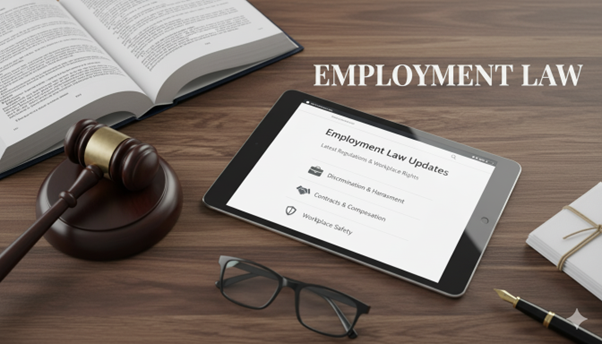
Law Updates (2023–2025):
- Minimum Wage: RM1,700/month (from Aug 2025 for small employers).
- SOCSO/EIS: Coverage ceiling raised to RM6,000.
- Working Hours: Reduced to 45 hours/week.
- Flexible Work: Employees can request new schedules—employers must reply within 60 days.
- Gig Workers Bill (2025): Statutory framework for gig workers.
- Tax Incentives: Up to RM500,000 deduction for adopting flexible work systems.
- Expatriates: DG approval + notification within 14 days (Section 60K EA 1955).
Tip: Compliance = insurance. It saves you from lawsuits, fines, and disruption.
East Malaysia: Sabah & Sarawak Catching Up
On 1 May 2025, both states aligned their laws with Peninsular Malaysia.
Key highlights:
- Coverage Expanded: Now applies to all employees (except >RM4,000/month earners).
- Maternity Leave: 98 days.
- Paternity Leave: 7 days (up to 5 confinements).
- Sick Leave: Up to 22 days + 60 days hospitalisation leave.
- Working Hours: 45 per week.
- Public Holidays: Sabah = 15; Sarawak = 18 (includes Sarawak Independence Day).
- Harassment & Discrimination: Now expressly covered.
- Stricter Penalties: Up to RM100,000 fines + possible jail for serious breaches.
Tip: East Malaysia is no longer a grey zone. Update contracts now.
Final Thoughts: Systems = Stability
Think of contracts as safety belts, not shackles.
An employment system doesn’t slow you down—it lets you scale safely. With it, you:
- Hire confidently
- Protect your know-how
- Keep your team aligned
- Avoid compliance nightmares
Employer Checklist:
- Offer letters to set expectations
- Employment agreements to protect your business
- NDAs to guard your secrets
- Stay updated with law changes (Peninsular + East Malaysia)
- Align all contracts with current standards
Final Word
An employment system isn’t bureaucracy. It’s your business shield.
It protects what you’ve built, helps you keep good people, and ensures you grow without fear. Don’t wait for betrayal or a lawsuit.
👉 Act early. Set your system. Safeguard your future.
____________________
About the Author
Hi! I’m Esther Tang, a business lawyer based in Sarawak and Kuala Lumpur. I help business owners structure partnerships, manage shareholder relationships, and resolve shareholding issues—simplifying complex legal matters so they can spend less time worrying about compliance and more time focusing on what they do best: building their business with clarity and confidence.
____________________
Get in Touch
Starting a business, restructuring ownership, or facing shareholder challenges? Let’s work together to bring clarity and peace of mind to your business journey.
📩 Email: esther@etsylaw.com
🌐 Website: www.etsylaw.com
📍 Offices in Sarawak & Kuala Lumpur
© 2025 SY Tang & Co Advocates. All rights reserved.
Disclaimer: This article is shared for general information only. It’s meant to help you understand the law better, not to give you advice on your specific situation. Laws change, and how they apply depends on your unique circumstances.
Reading this article does not create a lawyer–client relationship with our firm. If you need advice on your particular case, please reach out to a qualified lawyer who can look at the details and guide you properly.